ServicesRoof Replacement
Roof Replacement in The Village
When repairs stop making sense, we replace the whole roof system: tear-off, decking, underlayment, flashing, ventilation and new shingles. You get a written scope first that explains what we will do, what could change the price and why, so the finished roof holds no surprises.
When a new roof is the right call
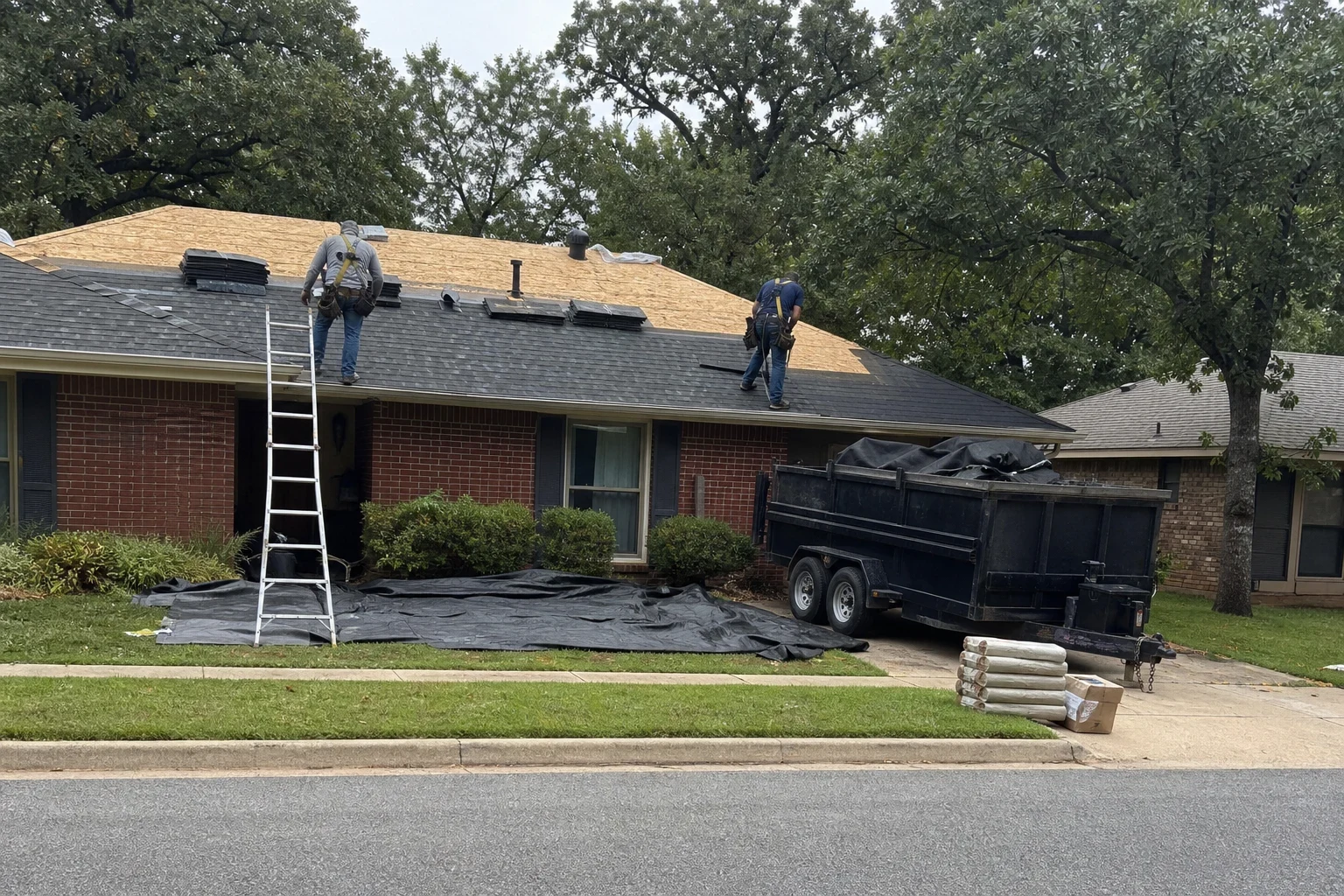
A roof replacement is not a bigger repair. We strip the old roof to bare sheathing, correct whatever has failed beneath it and install a new system whose layers are meant to work together. We recommend it when the shingles have reached the end of their life, when damage is spread across several slopes, or when repeated repairs cost more than they solve.
If a repair will honestly carry your home a few more years, we will tell you that and point you to our roof repair service instead. If replacement is the better value, we explain why in plain terms and put it in writing. Hail, spring wind and long summer heat wear asphalt roofs hard across central Oklahoma, so we look closely at granule loss and brittle tabs before giving an answer.
What your replacement includes
- Complete tear-off
- We take every existing layer off, right down to the wood. A new roof nailed over an old one covers up weak spots and wears out sooner, so we start from a clean deck.
- Decking inspection and repair
- With the deck exposed, we check each section for soft areas, rot and gaps between old planks. Any new sheathing appears on your quote at a per-sheet price, so the cost is settled before we open anything up.
- Underlayment and leak barriers
- Synthetic underlayment goes across the whole deck. In valleys and around pipes and vents, where water gathers, we add a self-adhering leak barrier.
- New flashing and drip edge
- New metal goes in at walls, chimneys and roof edges, along with new pipe boots. Rusted or loose old flashing is a common way water gets under an otherwise new roof, so we replace it rather than reuse it.
- Ventilation that matches the attic
- We balance intake and exhaust so heat and moisture can escape the attic. Steady airflow keeps shingles from baking in July and helps prevent condensation in winter.
- Shingles and finish work
- Architectural or impact-resistant shingles in your chosen color, fastened to the manufacturer's nailing pattern and finished with matching ridge caps for a clean line.
Signs your roof may need replacing
Curling or brittle shingles
When shingle corners lift and curl, or a tab breaks off as soon as you bend it, the asphalt has lost its oils. Patching one section at that point just shifts the leak somewhere else.
Granules in the gutters
A lot of sandy grit collecting in your downspouts means the protective surface is wearing off, leaving the shingle mat open to sun and hail.
Leaks in more than one spot
A single leak is often a repair. Stains in several rooms, or a leak that comes back after it was fixed, usually means the whole system has worn out.
Wavy or sunken roof surface
If the roof looks uneven or sags between rafters, the sheathing below may have softened from years of trapped moisture. Have it checked before the next heavy rain.
Widespread hail bruising
Soft dents and cracked mats across several slopes are often better addressed with a full replacement. Our storm damage repair page explains how we assess this.
What moves the price
We price each roof from its own measurements and condition rather than a flat rate. These are the factors that shift the number, and every one of them is written into your quote so you can see where the money goes.
Size and pitch
The number of squares sets how much material your home needs, and the pitch sets how quickly the crew can work. A steep roof calls for harnesses, roof jacks and slower, careful movement, all of which add labor hours.
Old layers underneath
Some older roofs have two or even three sets of shingles stacked on top of each other. Each extra layer takes more time to strip and adds weight to the haul-off.
Decking condition
Rotted or gapped sheathing has to come out. We set a per-sheet price ahead of time so the final bill lines up with what you approved.
Shingle choice
Impact-resistant shingles cost more than standard architectural lines, and in return they hold up better when hail comes through.
Roof details
Chimneys, skylights, valleys and dormers each need flashing cut and fitted by hand, which adds time to the job.
How the work goes
- 1
Inspection and measurements
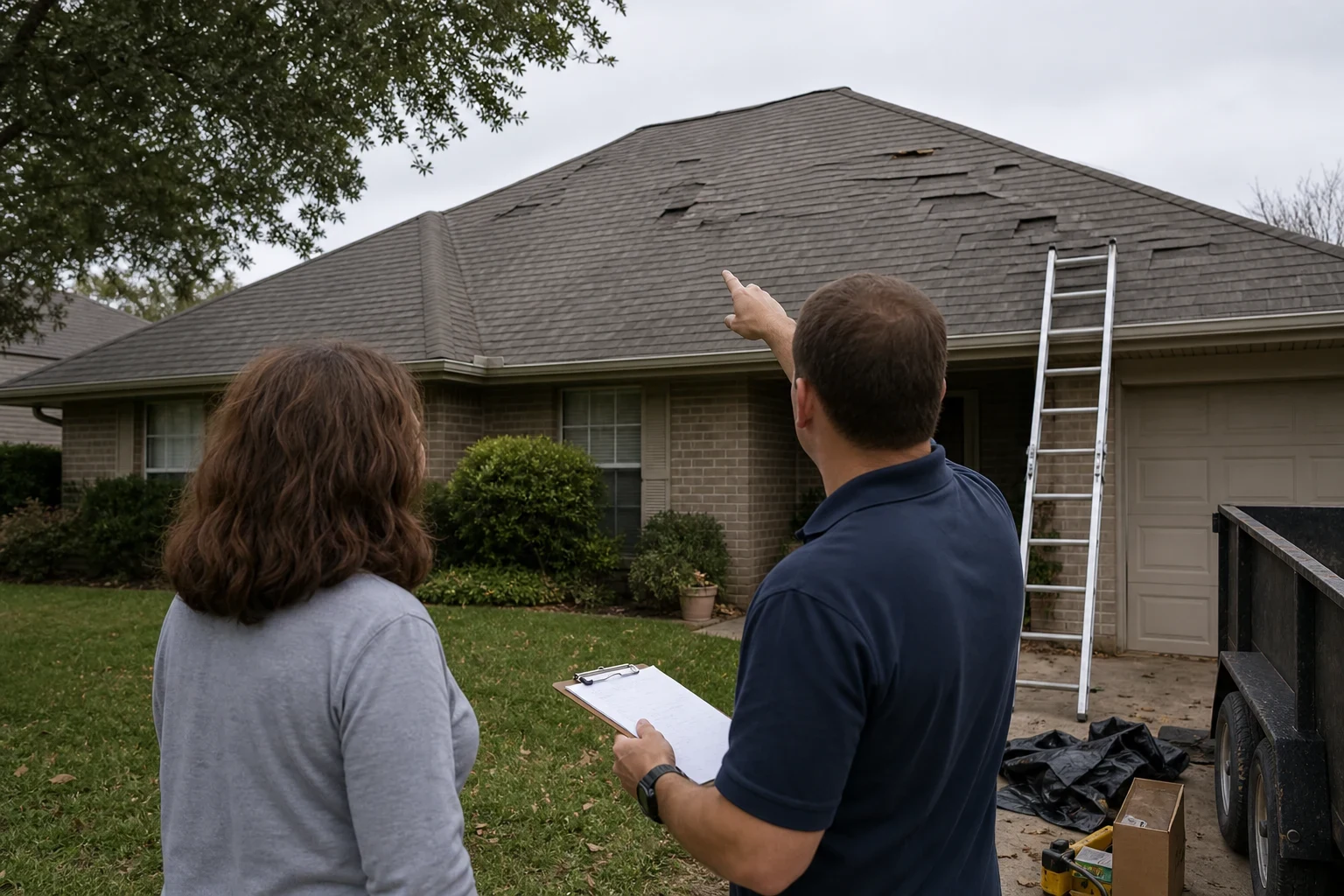
We measure each slope, look at the underside of the deck from the attic and take photos as we go. Those same photos come with your written scope, so you see exactly what we saw.
- 2
Your written quote
It names the materials, the layers coming off, the flashing and ventilation work, and the per-sheet price for any decking. We sit down with you and go through each line before you decide.
- 3
Permits and timing
If a permit is required, we file it and take care of the inspection steps. We schedule around a dry stretch and have materials dropped off shortly before the start date.
- 4
Installation day
Tarps go over landscaping, siding and windows are protected, and the dumpster is placed so your driveway stays usable. On most homes the old roof comes off and the new one is dried in the same day.
- 5
Cleanup and walkthrough
We run magnets across the yard to pick up stray nails, clean out the gutters and tour the finished roof with you, along with photos of the layers now under the shingles.
Roof replacement questions
How long does a roof replacement take?
Once work begins, most single-family homes are finished in one to two days. A larger or steeper roof, or a lot of decking repair, can stretch that. Your quote includes an expected schedule, and we let you know if weather moves it.
What if you find bad decking after the tear-off?
The per-sheet price for replacement decking is already on your quote. If we find damaged wood, we send you photos and replace only the sheets that need it, at the price you agreed to. Nothing goes on the bill without your knowledge.
Will insurance pay for my new roof?
When hail or wind caused the damage, your policy may pay for some or all of the replacement. We photograph what we find and can be on the roof when the adjuster visits, but your insurer is the one who decides what is covered. We walk you through each step so the paperwork makes sense.
Are impact-resistant shingles worth it here?
For a lot of homes in the Oklahoma City area, they are. They take hail better than standard shingles, and some insurers lower premiums for them. Check with your agent, and we will show you the cost difference side by side in your estimate.
Do I need to be home during the work?
Not necessarily, though we like to meet you when we start and again for the final walkthrough. Tear-off is loud, so plan for that, and keep pets and cars away from the driveway and work area.
Is it okay to shingle over the existing roof?
We recommend against it. Taking the old roof off lets us inspect and fix the decking, fit new flashing and give the new shingles a flat, sound base. An overlay also adds weight and can conceal damage that keeps growing underneath.
See your new roof on paper first
Describe what you are seeing on your roof and we will arrange a time to inspect it. Then we go over a written scope that covers every layer and every price factor before work starts.