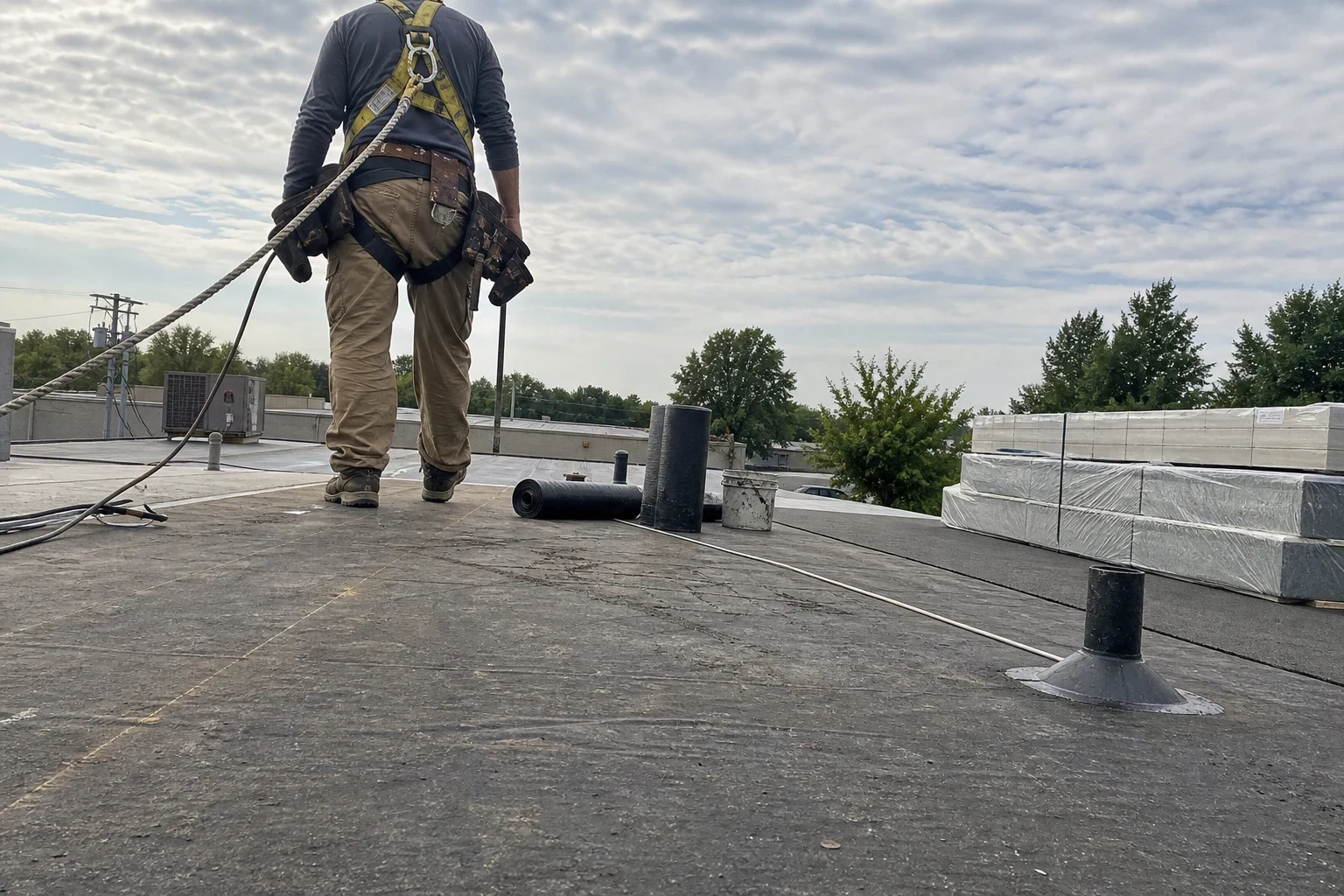
ServicesCommercial Roof Replacement
Commercial Roof Replacement in The Village, OK
When the low-slope roof on your building has reached the end of its life, we replace it from a clear written scope. The membrane, insulation, flashing details and every pricing factor are set down on paper before a crew member climbs the ladder.
When replacement is the right call
Most commercial roofs are low-slope systems: TPO, EPDM, modified bitumen or an older built-up roof, sometimes with metal over a warehouse or shop. Repairs keep these roofs working for years. Eventually the membrane turns brittle, the insulation underneath holds water, and each patch buys less time than the last. At that point a new roof costs less over the life of the building than another round of fixes.
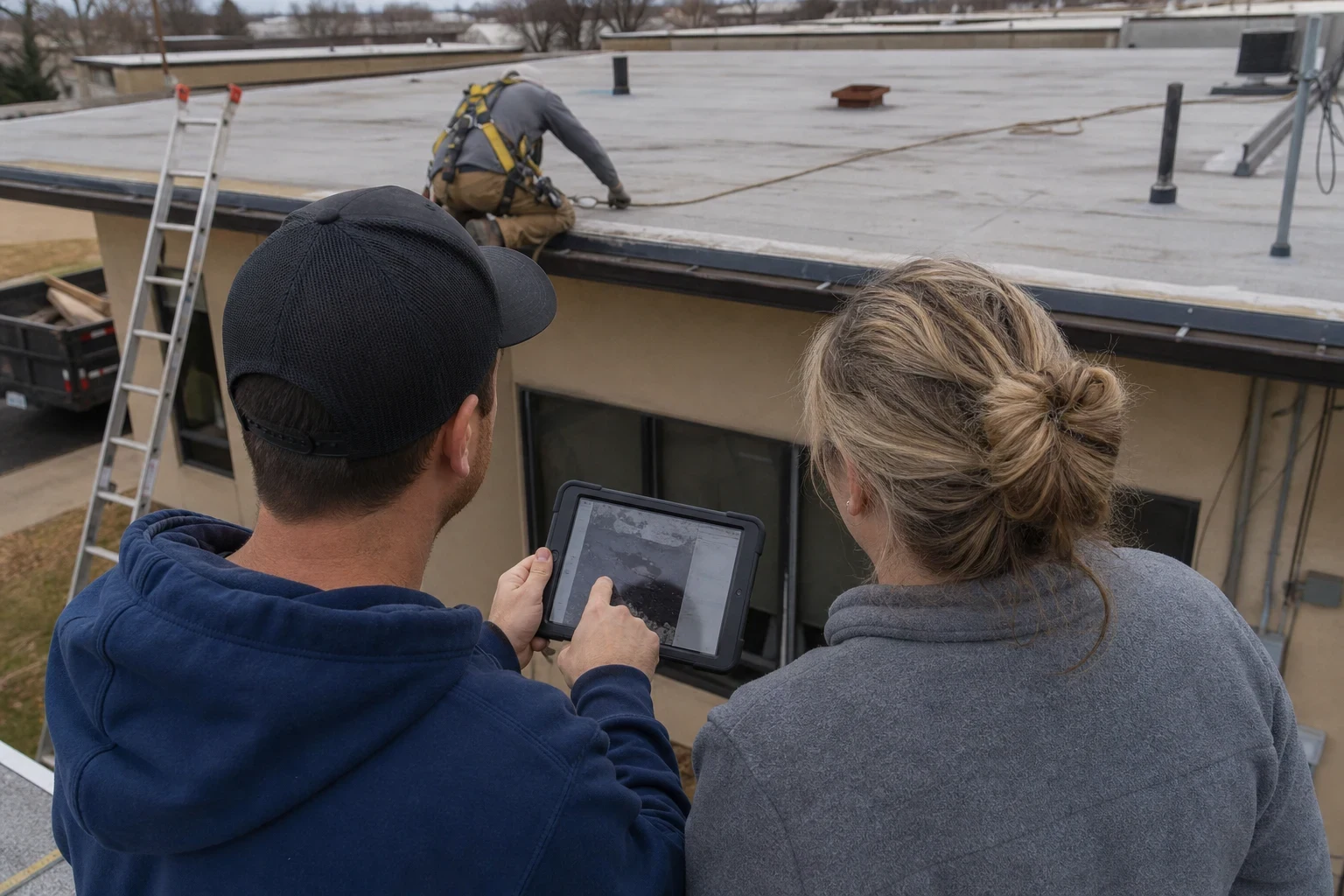
We start with what is actually on the roof and under it. Moisture readings and a few small core cuts tell us whether the deck and insulation are sound, and that decides between a full tear-off and a recover over the existing system. You get the answer in writing, with the reasons, so you can plan the budget and share it with partners or a property manager.
If the roof still has good years left, we will say so and point you to commercial roof repair instead.
What a replacement includes
- Tear-off or recover, decided by testing
- We remove the old membrane and wet insulation down to the deck when testing calls for it. Where code and conditions allow a recover, we lay out the trade-offs on paper so you can choose.
- Deck repair and fastening
- Rusted metal deck panels or rotted wood sections are replaced before anything new goes down. This work is listed as a unit price in your written scope, so deck damage found during tear-off never arrives as a surprise figure.
- Insulation and tapered slope
- New polyiso insulation brings the roof up to current energy code. Tapered panels move water toward drains and scuppers instead of letting it sit for days after rain.
- Membrane installation
- We install the system that suits the building and its use, most often TPO or EPDM. Seams are heat-welded or adhered, then probed by hand at the end of each day.
- Flashing, curbs and edge metal
- Parapet walls, rooftop unit curbs, pipe penetrations and perimeter edges are where most commercial leaks begin. Each detail is flashed new rather than tied into old material.
- Drains, scuppers and gutters
- We clear and reset drains, rebuild worn scuppers, and replace gutters or downspouts that can no longer carry what the roof sheds.
Signs your commercial roof needs replacing
Ponding that lingers
Water still standing two days after rain means the slope or insulation has failed. It wears down the membrane and adds weight the structure was not designed to carry.
Leaks in more than one place
One leak is a repair. Stained ceiling tiles across several bays, or leaks that return after patching, usually point to wet insulation spread across the roof.
Shrinking, cracking or blistering membrane
EPDM pulls away from parapets as it shrinks. TPO can crack after years of summer heat, and built-up roofs blister where moisture is trapped between plies.
Soft spots underfoot
If the roof gives when you walk it, the insulation or deck below is saturated. Wet insulation also stops insulating, which shows up on cooling bills.
Patches on patches
When the surface is a quilt of repairs from different years and different crews, a new system is usually the more predictable cost.
What shapes the price of a commercial roof
Every commercial price we write up is built from the same handful of factors, and each one appears as its own line. You can see why one approach costs more than another, and nothing is added once work begins. We do not give figures before seeing the roof.
Roof area and access
Square footage drives materials and labor. Building height, room for staging and whether a crane is needed affect the setup.
Tear-off versus recover
Removing every layer to the deck costs more up front than a recover, though testing sometimes rules a recover out. When both are options, we price both.
Condition of deck and insulation
Wet insulation has to go, and damaged deck panels have to be replaced. We price these per unit so the total stays predictable.
Membrane and insulation choice
Membrane thickness, color, attachment method and insulation depth all change the cost, along with how the roof handles summer heat.
Penetrations and details
A roof crowded with rooftop units, vents, skylights and parapets takes far more flashing time than an open, simple one.
How the work runs
- 1
Walk the roof and test
We inspect the surface, flashings and drains, take moisture readings and cut small cores to see each layer. You get photos of what we found.
- 2
Written scope and quote
The quote lists the system, insulation thickness, every flashing detail, disposal, the permit and unit prices for possible deck work. If any line is unclear, we go through it with you by phone before you sign.
- 3
Permit and scheduling around your business
We pull the permit and plan the work in sections so the building stays dry and open. Staging, deliveries and any crane lift are set around your hours, and we let staff or tenants know what to expect.
- 4
Install, section by section
Each day we tear off only what we can close in by evening. Adhesive work near air intakes is planned with the HVAC in mind to keep odors out of the building.
- 5
Final walk and cleanup
We magnet-sweep the grounds, haul off debris and walk the finished roof with you, seams, flashings and drains included.
Commercial roof replacement questions
Can our business stay open during the replacement?
In most cases, yes. We work in sections, close each one in before the end of the day, and plan noisy or odor-producing work around your hours where we can. We go over the schedule with you before the start date.
Do we need a full tear-off, or can you go over the existing roof?
It depends on what is underneath. Building code generally limits how many roof layers a building can carry, and a recover only makes sense over dry, sound insulation. Our moisture testing and core cuts answer the question, and the written scope explains the reasoning.
Which membrane is right for our building?
TPO is a common choice for its reflective white surface through Oklahoma summers. EPDM handles temperature swings well, and modified bitumen stands up to roofs that see regular maintenance traffic. We recommend one based on the building and how you use it, and note the alternatives in writing.
What happens if you find damaged decking during tear-off?
We stop, photograph it and show you. Replacement is billed at the unit price already written into your quote, so you know the cost of that discovery before work ever starts.
How long does a commercial roof replacement take?
A smaller building may take a few days, while larger roofs run longer. Weather, material deliveries and the amount of deck repair all affect the timeline. Your quote includes an estimated schedule, and we keep you updated as it moves.
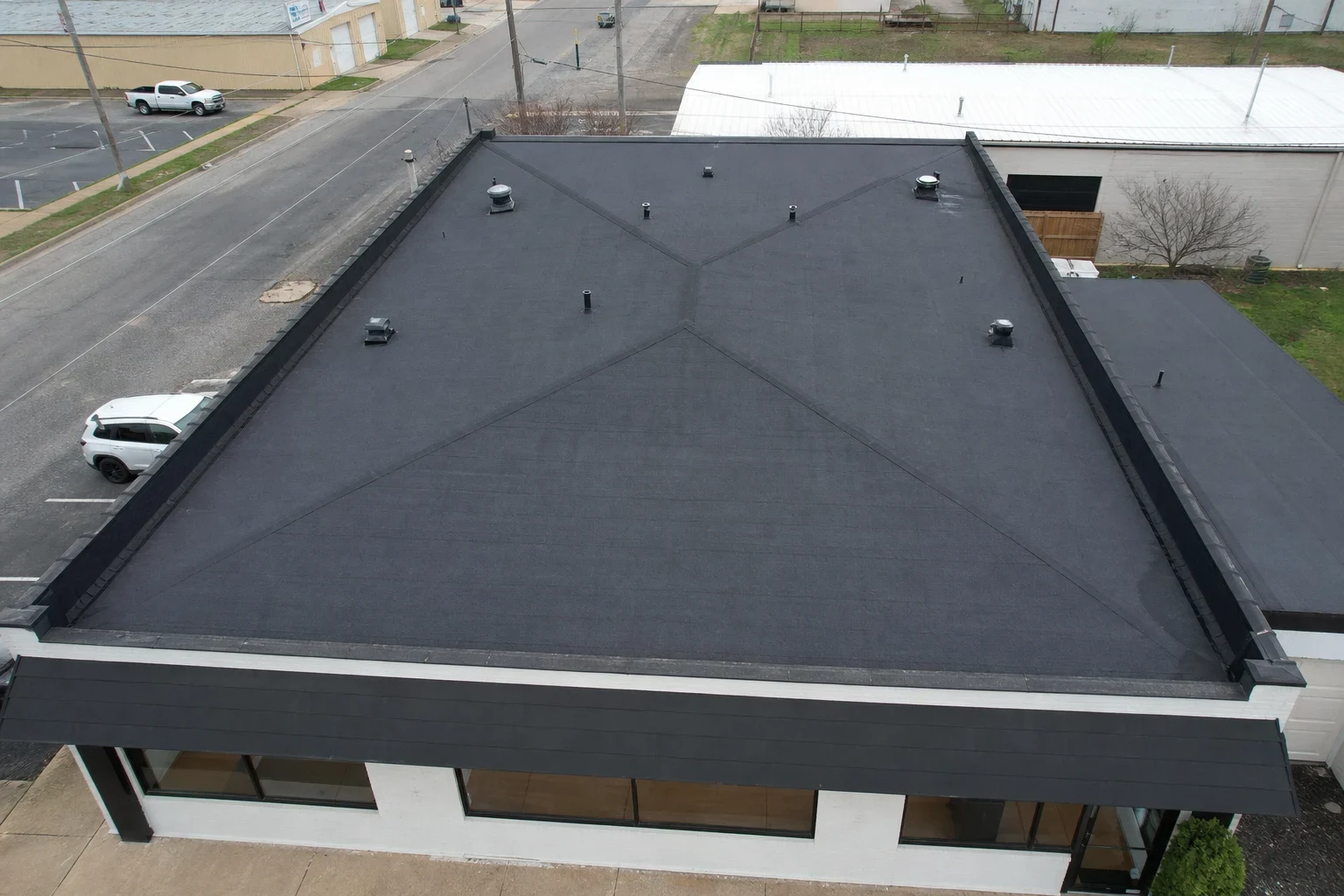
Get a commercial roof quote you can read line by line
Tell us about your building and we will set a time to walk the roof and test what is underneath. Then you get a written scope that names every factor in the price.