ServicesCommercial Roof Repair
Commercial Roof Repair in The Village
We find where water is getting into your building and repair that spot properly, on TPO, EPDM, modified bitumen, built-up and metal roofs. Before anyone starts, you get a written scope that lists each repair and what moves its cost.
Targeted repairs that keep a sound roof working
Most commercial roofs do not fail all at once. A seam opens near a rooftop unit, flashing pulls away from a parapet wall, or a clogged drain lets water sit until it finds a weak point. Fixed early, these are contained repairs. Left alone, wet insulation spreads under the membrane and the conversation turns to replacement.
Our job is to tell you which situation you are in. If the membrane is still healthy, we repair it and say so. If the damage is widespread, we explain why, with photos, and point you to our commercial roof replacement page rather than patching something that will not hold.
Hail and hard spring wind are routine around Oklahoma City, so we look past the obvious leak for bruised membrane and loosened edge metal that may cause the next one.
What a commercial repair visit covers
- Leak tracing
- Water often enters several feet from where it drips inside. We follow it back across the deck, checking seams, penetrations and drains until we find the actual entry point.
- Seam and membrane repair
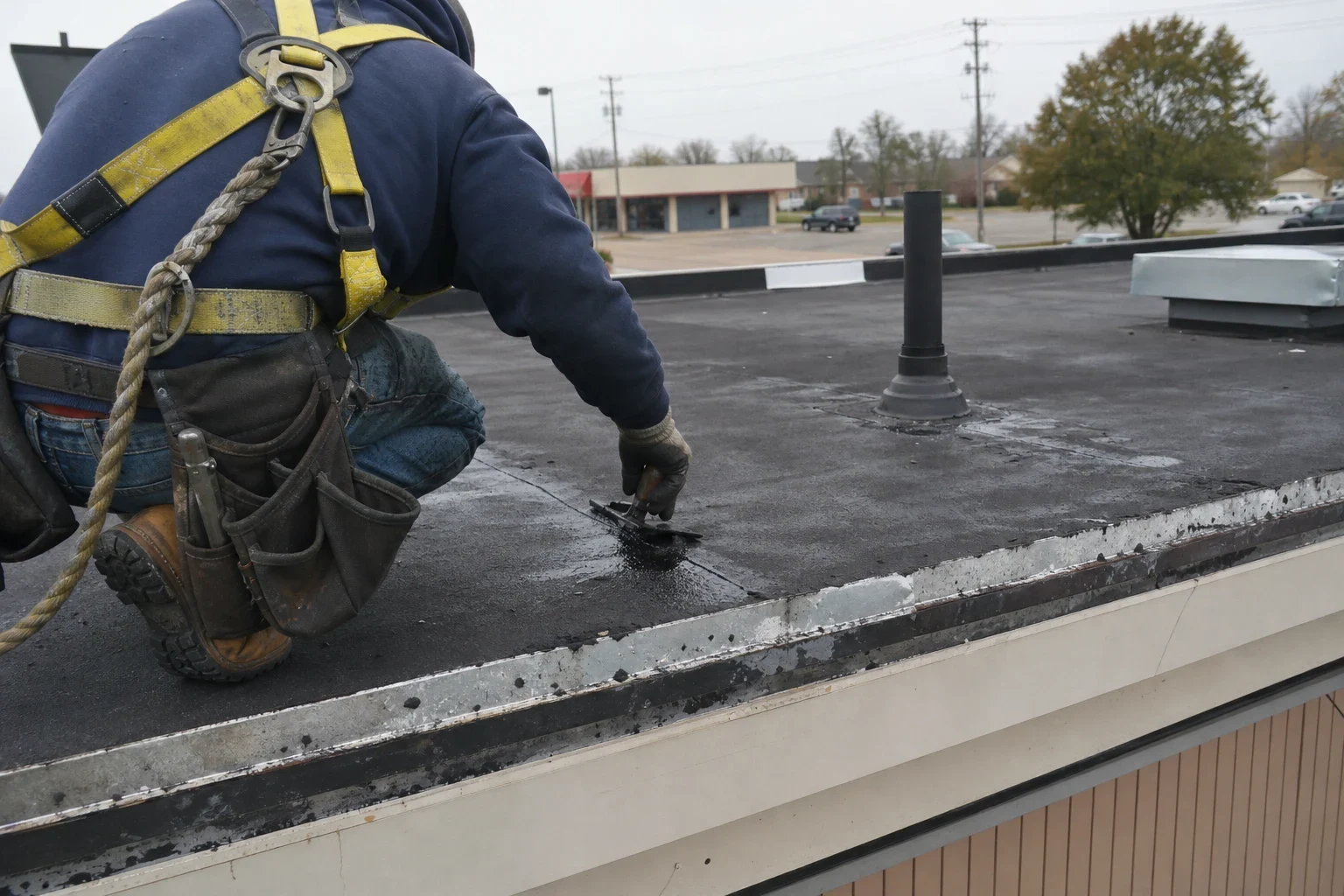
- On single-ply roofs we clean and prepare the surface, then heat-weld or adhere new material matched to the existing membrane. Torn or punctured sections are cut out and patched, not just coated over.
- Flashing and penetrations
- Curbs, vent pipes, pitch pans and parapet walls are where most leaks start. We seal these details again or build them new, using flashing that can flex as the deck expands on hot afternoons and shrinks on cold nights.
- Drains and ponding
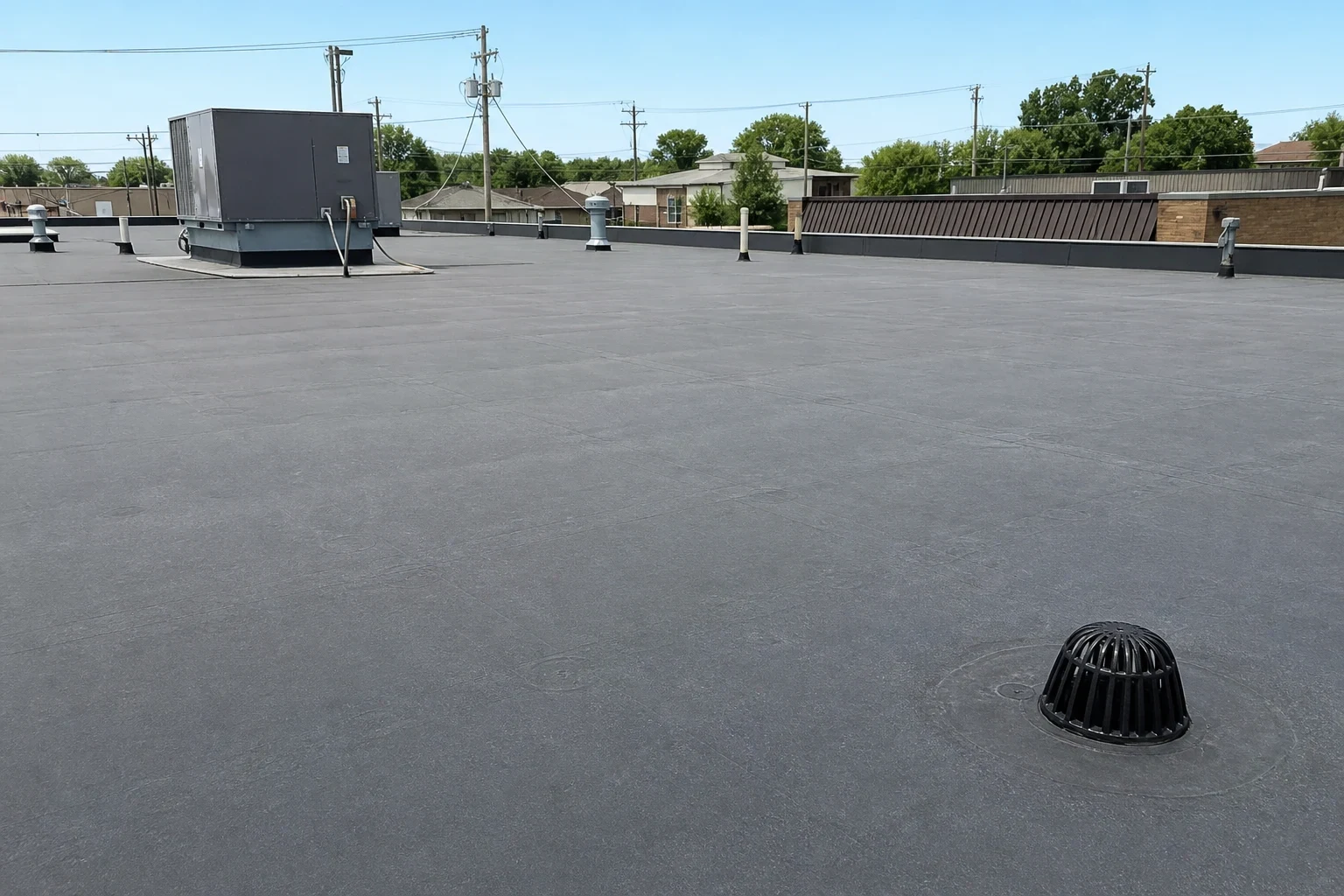
- We clear scuppers and internal drains, check strainers, and note any low areas holding water more than a couple of days after rain.
- Metal roof fasteners and seams
- Exposed fasteners back out as panels expand and contract. We replace worn screws and washers and reseal laps and ridge caps.
- Photos and clear findings
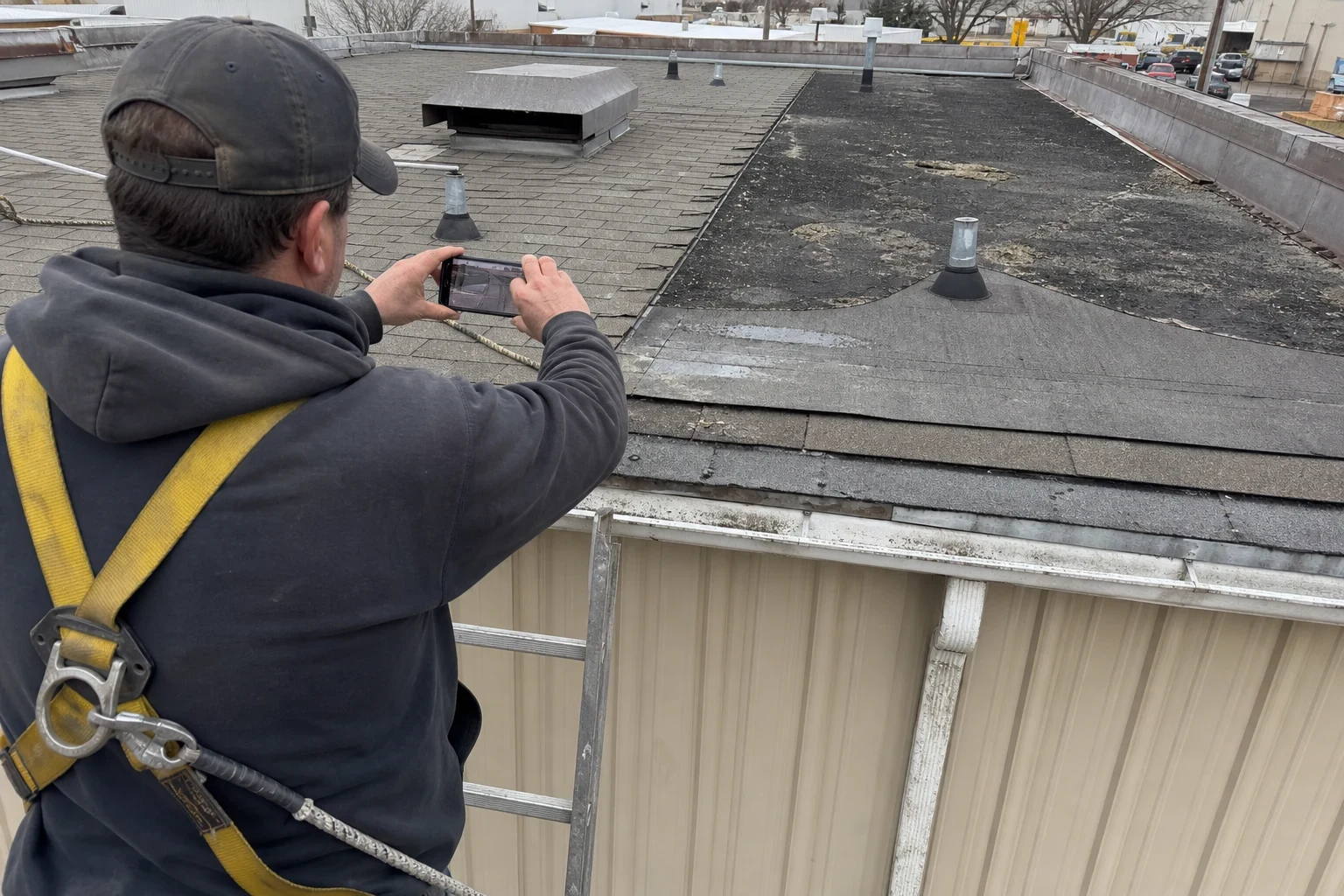
- You receive photos of what we found and a plain list of the repairs, so the people who sign off on the work can see exactly what they are paying for.
Signs your commercial roof needs repair
Stained ceiling tiles
Brown rings on drop ceilings are usually the first sign. By the time they show, water has often been reaching the deck for a while.
Water that stays after rain
Ponding that lingers past 48 hours adds weight and speeds up membrane wear, especially along seams.
Bubbles, blisters or loose seams
Blistering on built-up or modified bitumen roofs and lifted seam edges on TPO mean moisture or air has gotten underneath.
Damage around rooftop equipment
Foot traffic from HVAC service, dropped tools and vibration wear down the membrane near units. These areas deserve a look after any equipment work.
Rising energy bills
Wet insulation loses most of its value. If heating or cooling costs climb without a clear reason, the roof is worth checking.
How a repair job runs
- 1
Walk the roof and the interior
We look at the leak from inside first, then go up and trace it. We also check drains, edges and equipment curbs while we are there.
- 2
Written scope before work
You get a list of each repair, the materials we plan to use and the factors behind the cost. Nothing is added later unless you approve it first.
- 3
Schedule around your operations
We plan the work to limit disruption to tenants, staff or customers, and keep access points and walkways clear.
- 4
Repair and clean up
We complete the agreed repairs, haul off old material and leave the roof and grounds clean. You get photos of the finished work.
What affects the cost of a commercial repair
We price each job from the conditions on your deck, not from a standard rate sheet. The written scope breaks the cost drivers out line by line, so you can compare it fairly and decide with the full picture in hand.
- Roof system and material
- Heat-welding TPO, adhering EPDM and patching a built-up roof each take different materials and labor.
- Size and spread of the damage
- A single failed seam is a small job. Wet insulation that has to be cut out and replaced adds time and material.
- Access and height
- Roof hatches, ladder setup, building height and how far material has to travel all play a part.
- Penetrations and equipment
- Repairs around HVAC curbs, skylights and conduit take more detail work than open field areas.
Commercial roof repair questions
Something not covered here? (405) 870-9078
Can you repair our roof, or does it need replacing?
Most roofs with localized damage can be repaired. If wet insulation covers a large share of the deck or the membrane has worn thin across the field, repairs become a poor use of money. We tell you which applies and walk you through the reasoning.
Do you work on flat and metal commercial roofs?
Yes. We repair TPO, EPDM, modified bitumen, built-up and metal panel roofs. Matching the repair material to the existing system matters, because mismatched products do not bond or move together.
Will the work disrupt our business?
Repairs happen on the roof, so interiors are usually unaffected. We coordinate timing with you, keep entrances clear and let you know about any noise or odor from adhesives ahead of time.
Can you help after hail or wind damage?
Yes. We photograph any bruised membrane, torn seams or loosened edge metal and write up what we found, and that record is yours to pass along to your insurance company. Coverage is the adjuster's decision. Our part is explaining the damage and what the repair involves, and our storm damage repair page goes into more detail.
How often should a commercial roof be checked?
Twice a year is a sensible rhythm, in spring and fall, plus after any major storm or rooftop equipment work. Our roof inspections service covers these routine checks.
Get the repair spelled out before it starts
Tell us what you are seeing inside and on the roof. We will set a time to look, then put the scope and cost factors in writing for you to review.