ServicesGutters
Gutter Installation and Replacement in The Village
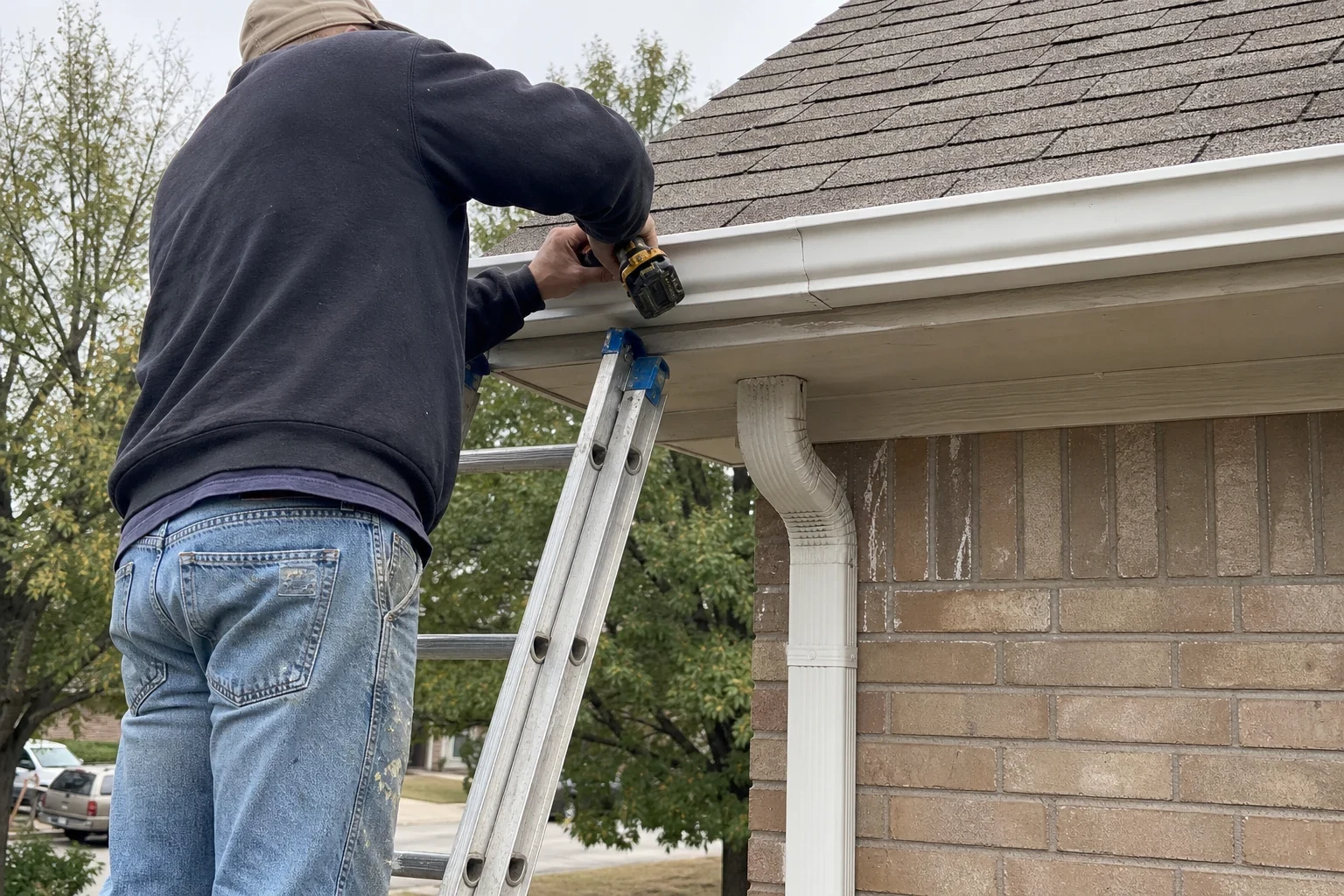
We hang continuous aluminum gutters, with downspouts placed to carry rainwater clear of your fascia, siding and foundation. Before any work begins, your written quote spells out the gutter size, the number of downspouts and any fascia repair, so the figure you approve is the figure you pay.
Gutters that keep water off your walls
Every rain sends a surprising amount of water off your roof, and the gutters decide where it ends up. When they sag, leak at joints or overflow, that water runs down the fascia, stains the siding and saturates the soil along your foundation.
We install continuous aluminum gutters shaped on site to the full length of each eave, leaving joints only at the corners and the outlets. Fewer joints leave fewer places for a drip to start. Spring storms in Oklahoma can unload heavy rain in minutes, so we match the gutter and downspout size to the roof area and pitch above each run instead of putting one size on every house.
Replacement makes sense when gutters are pulling loose, rusted through or too small for the roof. If yours are fairly new and only one section is acting up, we will say so and recommend a repair instead.
What your gutter job covers
Runs formed at your home
We roll each gutter from a coil of factory-painted aluminum in your driveway and cut it to the exact length of the eave. Pick a color that blends with your trim or sets it off.
Sized to the roof
A 5-inch K-style gutter suits many homes. Long, steep or wide roof planes often call for 6-inch gutters and larger 3x4 downspouts so heavy rain stays in the channel.
Concealed hangers and steady pitch
Hidden hangers are fastened into the fascia at tight, regular intervals, which helps the gutter keep its shape under soggy leaves or a load of ice. Every run slopes slightly toward its outlet so water never sits still.
Downspouts that discharge well
Downspouts go where water can leave without crossing a walkway or pooling by the foundation. Extensions or splash blocks are added where the grade needs help.
A look behind the old gutters
With the old system down, we inspect the fascia and drip edge. Any rotted wood is photographed and priced as a separate written line before we touch it.
Haul-away and cleanup
Old gutters, fasteners and offcuts leave with us, and we sweep the beds and lawn with a magnet to catch stray screws.
Signs your gutters need work
Water spilling over the front edge
If rain sheets over the outer lip during an ordinary shower, the gutter may be packed with debris, pitched backward, or simply too small for the amount of roof draining into it.
Sagging runs or a gap at the fascia
A gutter that droops between hangers or leans out from the board behind it usually has loose fasteners, or soft wood that can no longer hold them.
Drips at seams and corners
Sectional gutters are joined about every ten feet. Once the sealant at those joints dries out, each one becomes a slow leak that leaves marks down the siding.
Streaks, mildew or flaking paint
Dark lines on the siding, paint peeling off the trim or mildew forming under the eaves all point to water escaping where it should stay in the channel.
Washed-out soil or damp basement walls
A rut worn into the ground below a downspout, or moisture showing along an inside wall, often means water is being dropped too close to your home.
How we handle a gutter project
- 1
Measuring and checking drainage
We measure each run, note the pitch and how much roof feeds each side, and look over the fascia and current downspout spots. If we see a roof issue that would affect the new gutters, we point it out plainly.
- 2
Your written quote
The quote lists gutter size and color, footage, downspouts, extensions and any fascia work line by line. Nothing is added on install day unless you approve it in writing first.
- 3
Install day
A typical house wraps up within one working day. Old gutters come down, approved fascia repairs go in, and then we form, hang and seal the new runs and fit the downspouts.
- 4
Flow test and final walk
We send water through each run to confirm it reaches its outlet, tidy the site, and walk around your home with you before we pack up.
What moves the price of new gutters
Most of a gutter price comes from two things: how much gutter your home needs and how hard the eaves are to reach. Each item below appears as its own line on your written quote, so you can trace the total back to the work.
- Total length and miters
- The combined footage of every run drives most of the cost. Each corner, inside or outside, needs its own cut, fit and seal, which adds both material and labor.
- Gutter and downspout size
- Six-inch gutters with 3x4 downspouts cost more than 5-inch gutters with 2x3 downspouts. On a large or steep roof, the bigger size may be the one that actually keeps up.
- Eave height and working room
- Second-story eaves, steeper pitches and narrow gaps between houses call for taller ladders, extra setup and slower, more careful work.
- What the fascia looks like underneath
- Soft or rotted boards must be replaced before a new gutter can be fastened to them. We can only confirm this once the old gutter is down, so fascia work is listed separately and approved by you first.
Common questions about gutters
Something not covered here? (405) 870-9078
Why choose one-piece gutters over sectional ones?
Sectional gutters come in short lengths joined about every ten feet, and each joint relies on sealant that cracks as sun and seasonal temperature swings work on it. A continuous run formed to the length of the eave only has joints at the corners and at the downspout outlets. With so few seams, there are far fewer places for a drip to begin.
How do I know whether I need 5-inch or 6-inch gutters?
We measure the area of the roof plane that empties into a given run and factor in its pitch, since steeper slopes shed water faster. Many single-story homes do well with 5-inch gutters. Large or steep planes, and valleys that funnel rain toward one corner, usually call for 6-inch gutters with bigger downspouts. The size we recommend, and the reason for it, is written on your quote.
If I also need a new roof, which should come first?
In most cases the roof goes first. New drip edge is set as part of the roofing work, and the gutters are then hung so they sit properly behind it. If a roof replacement is already on your mind, bring it up on the phone and we can schedule both in the right order.
Can my current gutters be repaired instead?
Often they can. Resealing a corner that drips, adding hangers where a run sags, or resetting a section that has lost its slope can keep a system going for years. When the gutters are rusted through, too small for the roof, or failing in several spots, we say so directly and show you photos of what we found.
Will my flower beds and lawn be okay?
We set ladders carefully, keep materials on the driveway or open lawn rather than in your beds, and collect every piece of old gutter and every loose screw before we leave.

Let's get your gutters measured
Describe what happens when it rains at your place and we will set a time to measure the runs and check the fascia. The scope, sizes and price come to you in writing before any date goes on the calendar.