ServicesRoof Inspections
Roof Inspections in The Village
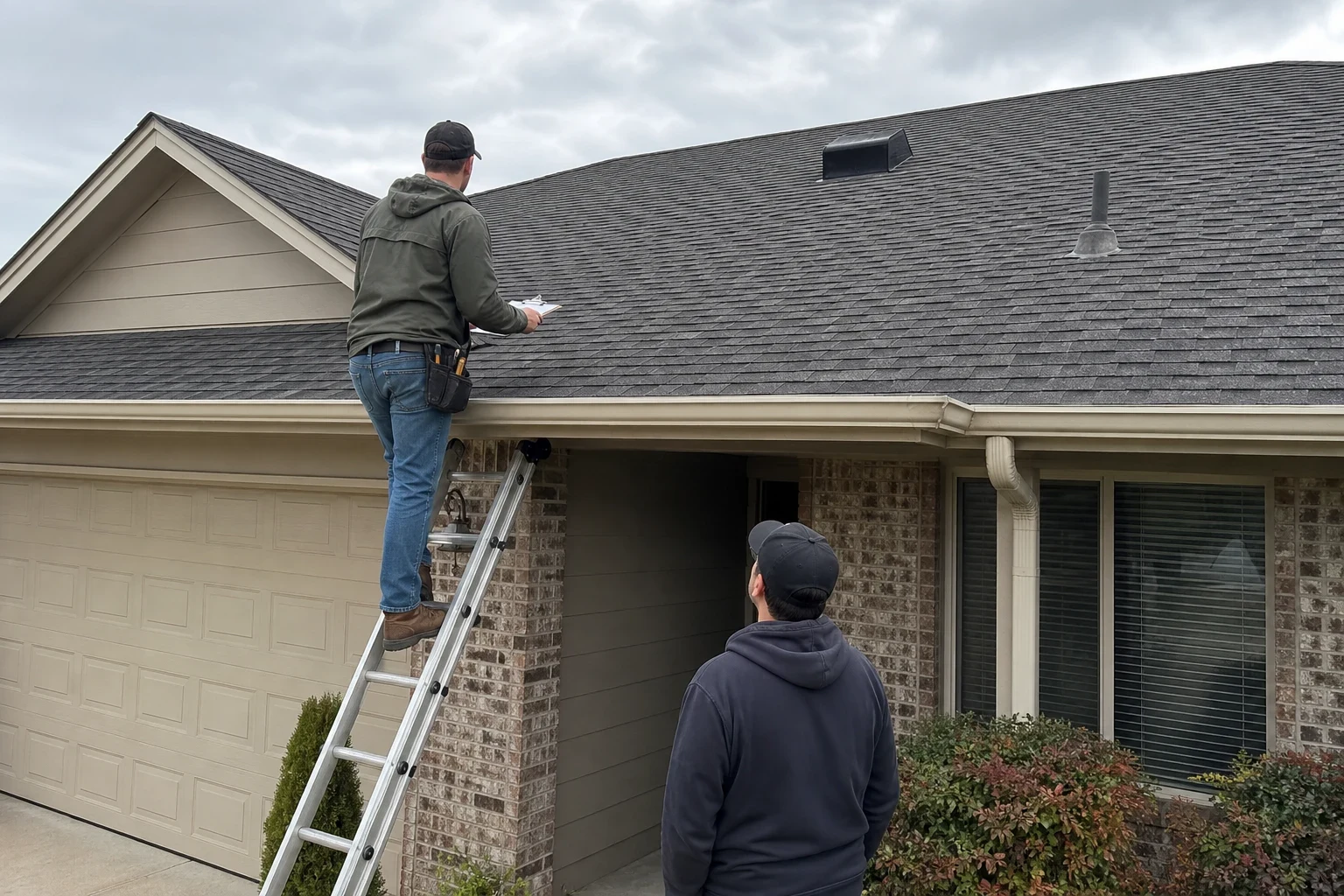
We walk your roof, check the flashing, decking and drainage, and photograph what we find. You get a written report that says what is sound, what needs attention now and what can wait, so any decision about repair or replacement starts from clear facts.
Why homeowners book an inspection
We look closely at every layer of the roof we can reach. Outside, that means shingles, flashing, vents, pipe boots and gutters. From the attic, it means the underside of the decking. An inspection makes sense before you buy or sell, after a hard storm, once a roof passes fifteen years, or whenever you want a clear picture of its condition.
Every finding is photographed and explained in a report. Anything we recommend comes with its scope and the factors that would drive its price, set out in writing before work starts, so nothing appears later that you did not see first. Plenty of inspections end with no work needed, and when that is the case we say so plainly.
Hail and spring wind across Oklahoma wear roofs in ways that are hard to judge from the ground, which is why we get up on the roof and into the attic rather than looking from the driveway.
What we check on your home
Shingle surface and granule loss
We look for bruised or cracked shingles, bare patches where granules have washed off, curling edges and lifted tabs. The amount of granules in the gutters tells us a good deal about how much life the roof has left.
Flashing, valleys and penetrations
Water usually gets in at the joints, where shingles butt up against a chimney, a sidewall, a skylight or a plumbing vent. We check step flashing, sealant and pipe boots, since the rubber on those boots tends to split in the sun long before the shingles wear out.
Attic and decking
From inside, we look for daylight through the boards, water stains, soft or damp decking and signs of condensation. We also note insulation that is blocking the soffit vents.
Ventilation balance
Poor airflow bakes shingles from below in summer and traps moisture in winter. We check intake and exhaust and tell you whether they are working together.
Gutters and drainage
We check that gutters slope toward the downspouts, sit tight against the fascia and are free of debris, and that each downspout empties well clear of the foundation. If they need work, our gutters service can handle it.
Photo report sorted by urgency
You receive a summary with a photo of each finding, grouped by how soon it needs attention, along with our honest view on whether repair makes sense or replacement is getting close.
Signs it is time for an inspection
A recent hail or wind storm
Hail bruising often looks like nothing from the yard. A close look soon after the storm records the damage while it is fresh and easy to show.
Ceiling or attic stains
A discolored patch on the ceiling often means water has been finding its way in for weeks or months. Tracing the entry point early costs far less than chasing it after the decking softens.
Granules at the downspouts
Sandy grit collecting at the bottom of downspouts means the shingles are shedding their protective layer.
A roof fifteen years or older
Asphalt shingles age faster under hot summers and freeze-thaw winters. A check at this stage lets you plan rather than react.
A sale or refinance ahead
Documented roof condition gives buyer and seller the same set of facts. It also keeps an unexpected repair request from turning up in the final days before closing.
How an inspection visit runs
- 1
Schedule by phone
Let us know why you are calling and any drips, stains or loose shingles you have spotted. We pick a time that works for you and mention that we will need to get into the attic.
- 2
On the roof
We walk the roof when it is safe, checking surfaces, flashing and penetrations and photographing as we go. When a roof is too steep or too brittle to walk without causing harm, we inspect from ladders set at the eaves and rely on close-up photos instead.
- 3
In the attic
We check the decking from below, trace any staining back toward its source and look at ventilation and insulation. We keep a drop cloth under the hatch and leave the space as we found it.
- 4
Walk-through and report
Before we leave, we show you the photos and talk through what we saw. The full report follows, listing each finding, what we recommend and what would affect the cost if you choose to go ahead.
What affects the cost of an inspection
We give you the inspection cost over the phone before we come out, so there is nothing to settle on the day. A few things change how long a visit takes and how much is involved. If the inspection leads to roof repair or other work, that is quoted separately and in writing.
- Roof size and pitch
- Larger roofs and steeper slopes take more time to cover safely and to document properly.
- Attic access
- A clear hatch and a walkable attic make the inside check quick. Tight crawl spaces or blown-in insulation covering the joists call for slower, more careful movement.
- Roof features
- Every chimney, skylight, dormer and valley adds flashing that we examine and photograph on its own, so a busy roofline takes longer than a simple gable.
- Purpose of the report
- A pre-purchase or storm-related inspection usually needs more detailed photos and notes than a routine check.
Roof inspection questions
Something not covered here? (405) 870-9078
How long does a roof inspection take?
Most homes take one to two hours, depending on size, pitch and attic access. The report comes after the visit, once we have sorted the photos and notes.
Will you push me toward a new roof?
No. If the roof is sound, the report says so. If something needs attention, we explain whether a targeted repair will do the job or whether roof replacement is the better use of your money, and we show you the photos behind that view.
Will an inspection help with my insurance claim?
We record storm damage with dated photos and notes you can pass along to your insurer. We are not your adjuster, but we can walk you through what we found, and we are glad to be on site when the adjuster visits if that helps you. Our storm damage repair page covers the repair side.
How often should my roof be inspected?
Every year or two suits most homes. Add a visit after any significant hail or wind, and before buying or selling.
What happens if you find something urgent?
We point it out before we leave and explain what is at risk if it waits. Any repair is quoted in writing first, so you decide with the scope and price factors in front of you.

Know where your roof stands
One visit gives you photos, a clear report and a straight answer on what, if anything, your roof needs. If work follows, you see the full scope in writing before anything starts.